All Categories
Featured

Fire Suppression System Inspection Sherman Oaks
Table of Contents
- – Commercial Hood Cleaning Service Sherman Oaks, CA
- – Instant Air Solutions
- – Restaurant Kitchen Ventilation Sherman Oaks, CA
- – Restaurant Ventilation Cleaning Sherman Oaks, CA
- – Restaurant Hood Installation Sherman Oaks, CA
- – Commercial Kitchen Hood Service Sherman Oaks, CA
- – Restaurant Hood Cleaning Near Me Sherman Oak...
- – Hood Vent Cleaning Services Sherman Oaks, CA
- – Restaurant Ventilation Cleaning Sherman Oaks...
- – Kitchen Hood Grease Removal Sherman Oaks, CA
- – Restaurant Hood Installation Sherman Oaks, CA
- – Kitchen Exhaust Cleaning Sherman Oaks, CA
- – Instant Air Solutions
Commercial Hood Cleaning Service Sherman Oaks, CA
To discover exactly how to clean your kitchen area hoods, oil catches, and filters, continue checking out listed below. An exhaust hood assists to draw smoke, fumes, and other particles airborne out of your kitchen. In time, these bits can construct up in your hood system, resulting in a need to have it cleaned up.
In a pail, prepare an option of cozy water and fluid. Using the solution, scrub the interior of the hood making use of a non-abrasive scrub pad, soft-bristle brush, or fabric. Make sure to eliminate any oil or added particles. After scrubbing, wipe the inside using a moist towel to eliminate any kind of soapy deposit.
Restaurant Kitchen Ventilation Sherman Oaks, CA
Making use of the cleansing service, scrub the exterior of the hood to eliminate any excess oil. Remove any kind of extra soap residue with a wet towel. Dry the exterior using a different towel. Give your kitchen hood added time to air dry. are created to keep fats, oils, and other oily substances from entering your building's air flow or sewage system.
The size of your grease traps can affect how commonly they need to be cleansed. Stick to the adhering to actions to maintain them in great problem: Eliminate the grease traps from your variety hood. Proceed to get rid of as much grease from them as you can. Make certain to position the oil in a separate container and refrain from washing it down a drainpipe.
Cleaning your ensures that your system can properly filter the air in your kitchen area. As air is pressed with your hood system, these filters work to catch fragments in the air and stop them from being reused back into the kitchen. Because of this, they can quickly come to be caked with oil and grime.
Area the filters in the water to soak. Given that there is a possibility the filters bring in added oil, consider allowing them to soak for 2-3 hours or also over night.
Restaurant Ventilation Cleaning Sherman Oaks, CA
To cleanse your kitchen hood fans, follow the actions below: To begin cleansing your fan, remove and eliminate it from the cooking area hood. As soon as the blower has actually been eliminated, separate the follower blade cover making use of a drill. This provides you accessibility to the individual follower blades. Get rid of each fan blade so that they can be cleaned individually.
As soon as the fan blades have actually had time to saturate, eliminate them from the water and enable them to completely dry. After they have actually had time to dry, reattach the fan blades.
Cleaning your cooking area hoods ought to be a normal event in your restaurant and something that you take care to schedule on a regular basis. Whether you're employing a service to do it for you or making an effort to cleanse them yourselves, keeping your hood systems tidy assists to facilitate a risk-free and healthy and balanced setting for on your own, your guests, and your staff.
Restaurant Hood Installation Sherman Oaks, CA
Hey Michael, welcome to the PWN grateful you stopped by. I do not do hood cleaning so I am not much assistance there, but among our moderators, Ant, is. Ideally he will thave ime to check in and answer. Otherwise, you can most likely to his website and obtain some excellent insight there.
I have actually been in the dining establishment Market for the previous 32yrs, and I must state that this company is the most expert and arrange group that I have had the pleasure of working with. Most important my hoods, duct and kitchen center are left spotless, and tidy which makes my job that a lot easier.
On the other end of the spectrum are country areas, where the atmosphere is extremely calmer and business competitors is much less fierce. Prices below can be exceptionally practical, often falling between. Such areas experience much less constant cleansing service demands, causing labor expenses that match the lower regularity of anticipated cleansings while still giving quality solution.
Commercial Kitchen Hood Service Sherman Oaks, CA
The dynamics at play do not simply conclude at prices; they expand into the frequency of service required as well. Urban cooking areas might require even more constant cleansings because of a higher volume of food preparation matched with tighter policies on wellness and security standards. This facet converts right into even more routine upkeep schedules that can substantially add to long-lasting costs.
Think about exactly how these variables interplay to influence your overall cleansing costs. The cost of commercial cooking area hood cleaning differs significantly based upon numerous critical variables. One of the main factors is the. A larger, extra sophisticated hood arrangement necessitates a lot more extensive labor and time for a detailed clean. A sprawling kitchen area in a bustling dining establishment, with numerous hoods over various cooking stations, will clearly require more job than a little caf with a solitary hood.
Regularly serviced exhaust systems tend to gather much less grease, bring about decreased labor expenses throughout maintenance. Consider it: a well-maintained hood cleaned up every 3 months will be a lot easier and quicker to service than one that hasn't seen a scrub in over a year. So, if you overlook cleaning for also long, that small investment might swell right into an all of a sudden significant costs when the moment comes.
Basically, this indicates greater costs contrasted to services located in locations with less extensive inspection standards. Understanding these components isn't merely scholastic; it has direct ramifications on just how you approach budgeting for upkeep throughout the operational cycle of your kitchen area. Whether you're beginning from scrape with new installations or evaluating existing contracts, maintaining these influential variables in mind aids you secure against shock bills while making certain compliance with market standards.
Restaurant Hood Cleaning Near Me Sherman Oaks, CA
Kitchen exhaust systems are created to get rid of warm, smoke, and grease, yet when overlooked, they become a significant fire threat. Specialist kitchen hood cleansing services systematically address this issue by getting rid of combustible debris from locations we frequently forget.
For beginners, examining for accreditations can be a significant green flag. A qualified firm, like, straightens itself with the criteria, guaranteeing they are learnt appropriate cleaning methods and laws. This guarantees you that your cleaning team understands just how to deal with oil buildup successfully while adhering to regional safety codes.
Over 60% of fires in eating and drinking establishments are triggered by food preparation equipment. And not the kind of avoidable incidents individuals make in your home. Deep-fried turkey, any person? We're discussing fires and other crashes triggered by the concealed buildup of grease through consistent use necessary devices. The conditions that cause this sort of danger are, in reality, unavoidable.
It is an absolute magnet for gunk and debris. Many kitchen exhaust hoods have 4 primary components. Here's what they are and what they do. These are stainless steel or mesh accessories that span the opening in the ductwork and keep debris from flying right into the fans. Behind the filters are one or even more mechanical followers that suck air up via the ductwork and out of the facility.
Hood Vent Cleaning Services Sherman Oaks, CA
The filters, followers, and oil traps are inside of the ductwork. Your dining establishment kitchen area hood has a constant supply of filthy, oily air flowing via it during all cooking hours.
That need to be factor enough. If you remain in a BBQ restaurant or using a great deal of solid-fuel, build-up on fan blades makes them louder. Increases overall health, saves money, hmm . audios like a QR code menu. The NFPA, in addition to their demand to tidy cooking area hoods, as a whole, outlines recommended regularities.
The NFPA advises that kitchen areas or cooking procedures making use of strong fuel ought to cleanse their hoods every month. High-volume operations without solid gas must undergo quarterly commercial array hood cleansing.
Restaurant Ventilation Cleaning Sherman Oaks, CA
Any food preparation operation with modest volume, or volume below that of an average industrial eating facility. Any low-volume cooking systems like churches, day camps, seasonal companies, or dining establishment operations in solution throughout only special events. On to the enjoyable stuff. Here's exactly how to clean up most business cooking area ventilation hoods, in 6 simple actions.
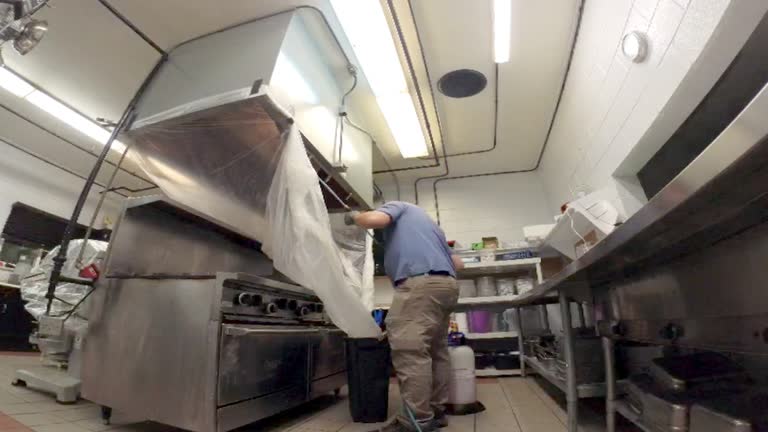
Unplug every little thing and allow everything cool off. Absolutely nothing around you must be from another location near getting on. Cover all bordering surfaces and equipment with plastic bed linen. This is a notoriously filthy job and grease drips and spills everywhere. Additionally, get all your restaurant cleansing materials and equipment in order: Plastic sheetingDegreaser concentrateNon-abrasive scrubbing pad or soft-bristled brushRubber glovesSanitization container Whether you have baffle, mesh, or charcoal filters, they must all conveniently push up and move out.
Kitchen Hood Grease Removal Sherman Oaks, CA
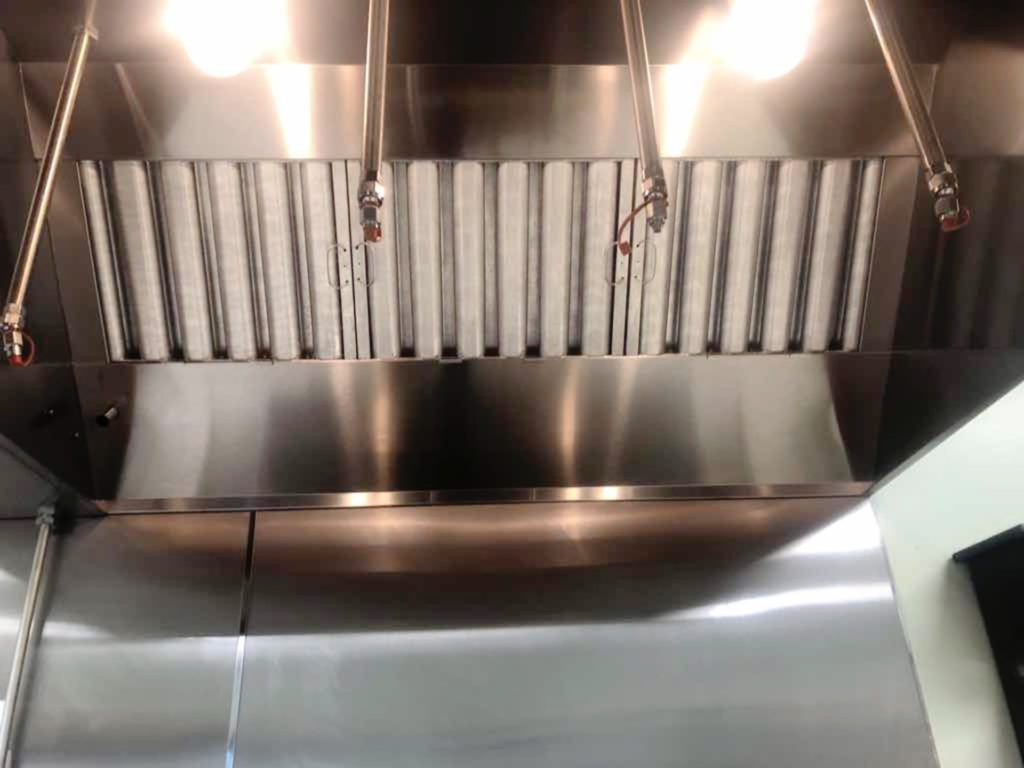
After eliminating the filters and spacers, you'll eliminate the grease cups or oil traps. There should be catches on each side of the hood.
It will certainly cake and trigger blockages. Let it completely dry, then toss it out in a sturdy, closed container. Wipe down the catches with non-abrasive searching pads or soft-bristled brushes. Traps are commonly too large to go through the meal pit. Soak them with the filters in the degreaser option for the exact same length of time.
Restaurant Hood Installation Sherman Oaks, CA
Several inconspicuous hoods have a dual-motor and dual-fan system. It attracts air from both sides of the hood for an even circulation of circulation. Remove each follower's protective fan cover, after that unscrew the center hub of the fan to pull it down. Offer your fans a scrub with a soft-bristle brush or non-abrasive scrubbing negative.
Yet they still secure you from touching a follower blade when the electric motor's on. If, somehow, you've taken the filters off without turning the fans off. Which you must never ever, ever before do. After re-installing the followers, position the grease catches, spacers, and filters back on. Remove the plastic sheeting that surrounds you, wipe the floorings, and voil.
And you'll conserve a good chunk of adjustment doing so. It's possible to review a year without cleansing your hoods without anything negative happening. But you're establishing yourself up for catastrophe. And fines. And closure. And ill-health. And contamination. The listing goes on. There's no reason not to cleanse your ventilation hood often.
Kitchen Exhaust Cleaning Sherman Oaks, CA
Roll up your sleeves and use a little elbow joint grease. The great grease.
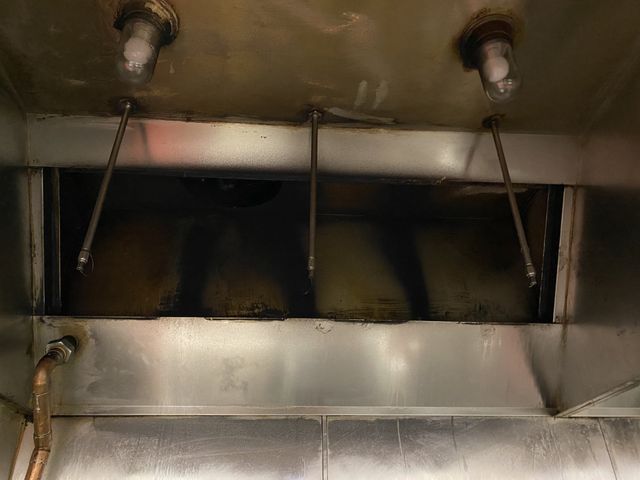
Having your cooking area exhaust system evaluated and cleaned up is not just a great idea; it's called for by law. The NFPA mandates regular examinations and cleansings, as do state and neighborhood fire codes., as defined by NFPA standards,: for systems serving strong fuel food preparation operations for systems serving high-volume cooking operations such as 24-hour cooking, charbroiling or wok cooking for systems serving moderate-volume food preparation operations for systems offering low-volume food preparation procedures, such as churches, day camps, seasonal organizations or senior centers The evaluation should consist of an assessment of the whole exhaust system for grease build-up, and it has to be carried out by a somebody who is appropriately trained and qualified.
Instant Air Solutions
Address: 412 W Dryden St Apt 6 Glendale, CA 91202Phone: (747) 307-6363
Email: instantairsolutionsinc@gmail.com
Instant Air Solutions
A legitimate accreditation of evaluation should always be continued the properties to provide to fire assessors as requested. The NFPA does not directly mandate the frequency of cleansing; that relies on the outcomes of the assessment and regional demands. If the inspector considers that the system is contaminated with oil, a professional cleaning is needed by a qualified professional.
Restaurant Hood Cleaning Service Sherman Oaks, CAKitchen Hood Inspection Sherman Oaks, CA
Fire Suppression System Inspection Sherman Oaks, CA
Kitchen Hood Maintenance Sherman Oaks, CA
Commercial Hood Installation Sherman Oaks, CA
Finding A Local Seo Services For Small Business Sherman Oaks, CA
Around Here Seo Solutions Sherman Oaks, CA
Instant Air Solutions

Table of Contents
- – Commercial Hood Cleaning Service Sherman Oaks, CA
- – Instant Air Solutions
- – Restaurant Kitchen Ventilation Sherman Oaks, CA
- – Restaurant Ventilation Cleaning Sherman Oaks, CA
- – Restaurant Hood Installation Sherman Oaks, CA
- – Commercial Kitchen Hood Service Sherman Oaks, CA
- – Restaurant Hood Cleaning Near Me Sherman Oak...
- – Hood Vent Cleaning Services Sherman Oaks, CA
- – Restaurant Ventilation Cleaning Sherman Oaks...
- – Kitchen Hood Grease Removal Sherman Oaks, CA
- – Restaurant Hood Installation Sherman Oaks, CA
- – Kitchen Exhaust Cleaning Sherman Oaks, CA
- – Instant Air Solutions
Latest Posts

Web Designer Near Me Ontario

Web Designer La Habra

Best Local Seo Companies Walnut
More
Latest Posts
Web Designer Near Me Ontario
Web Designer La Habra
Best Local Seo Companies Walnut